français
 English
 Deutsch
 italiano
 русский
 español
 português
 العربية
 Nederlands
 한국의
한국의 Romania
 Bulgaria
 Melayu

Électrolyse de l'eau alcaline L'électrolyse alcaline de l'eau (ALK) désigne la technologie de production d'hydrogène par électrolyse en milieu alcalin. L'électrolyte est généralement une solution d'hydroxyde de potassium (KOH) à 30 % (m/m). Le système de production d'hydrogène par électrolyse alcaline de l'eau se compose principalement d'un électrolyseur alcalin et d'un système auxiliaire (BOP). Les plaques d'anode et de cathode ne nécessitent pas de métaux précieux, ce qui réduit considérablement le coût de fabrication de l'électrolyseur et présente des avantages économiques significatifs. Cette technologie est actuellement l'une des plus répandues pour la production d'hydrogène vert à grande échelle.
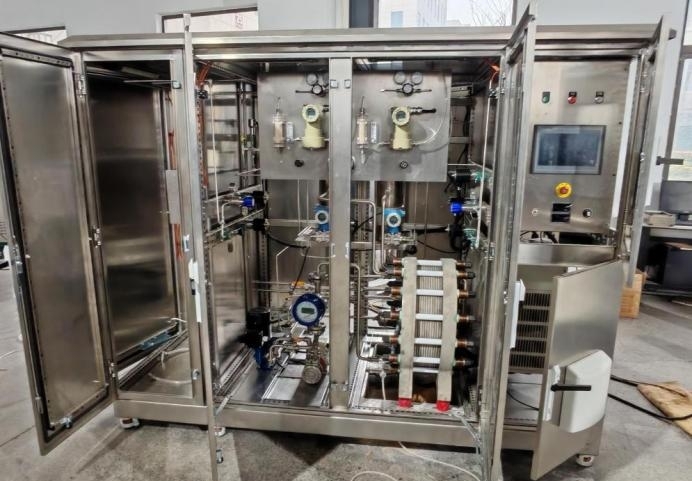
Figure 1. Schéma structurel du système de production d'hydrogène ALK
Le corps principal de l'électrolyseur alcalin est constitué de composants essentiels tels que des plaques d'extrémité, des joints d'étanchéité, des plaques d'électrodes, des électrodes et des diaphragmes. L'ensemble de l'appareil comprend des dizaines, voire des centaines, de chambres d'électrolyse. Ces chambres sont fixées aux plaques d'extrémité par des vis, formant une structure cylindrique ou carrée. Chaque chambre est divisée par deux plaques d'électrodes adjacentes et comprend six composants essentiels : des plaques bipolaires positives et négatives, une anode, un diaphragme, un joint d'étanchéité et une cathode. Ces composants fonctionnent de concert pour assurer une réaction d'électrolyse stable et efficace.
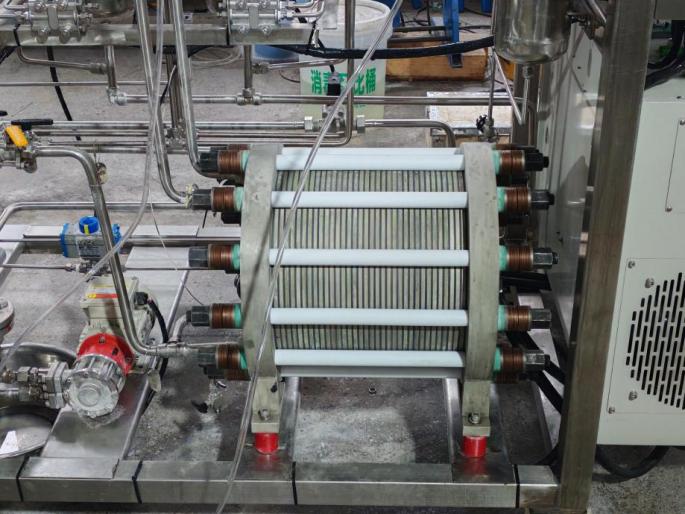
Figure 2. Photographie de l'électrolyseur
Lorsqu'une tension continue est appliquée entre l'anode et la cathode d'un électrolyte alcalin, un champ électrique stable se forme entre les électrodes. Sous l'effet de ce champ électrique, les ions hydroxyde (OH⁻) proches de l'anode subissent une réaction d'oxydoréduction et sont continuellement consommés, ce qui entraîne une diminution de leur concentration. Simultanément, les molécules d'eau proches de la cathode subissent une réaction de réduction, générant un grand nombre d'ions hydroxyde et provoquant une augmentation continue de leur concentration. Afin de maintenir l'équilibre dynamique des concentrations ioniques dans l'électrolyte, les ions hydroxyde migrent de la chambre cathodique vers la chambre anodique à travers le diaphragme. Simultanément, les électrons circulent de l'anode vers la cathode à travers le circuit externe, formant un courant fermé et convertissant ainsi l'énergie électrique en énergie chimique. Finalement, les molécules d'eau se décomposent continuellement en hydrogène (H₂) et en oxygène (O₂).
Réaction d'oxydation anodique : 4OH- - 4e- = H2O + O2↑
Réaction de réduction cathodique : 2H2O + 2e- = 2OH- + H2↑
Classification des électrolyseurs par différents types
| Taper | Caractéristiques structurelles | Avantages | Inconvénients | |
| Configuration de l'alimentation électrique | mono-étage | Structure simple, électrodes connectées en parallèle, faible tension de cellule et courant élevé | Structure robuste et simple, haute fiabilité, cellules individuelles faciles à entretenir et à remplacer | Nécessite une alimentation CC à courant élevé, encombrement important, pertes thermiques élevées à haute température, ne convient pas aux applications haute tension. |
| Bipolaire | Électrodes connectées en série, tension de cellule élevée et courant faible, conception actuellement dominante | Rendement électrique élevé, structure compacte, gain de place, adapté aux applications à haute pression et haute température | Structure complexe, exigences de haute précision pour les composants, coûts de maintenance élevés | |
| Configuration de la plaque | Plaque tricotée (Protubérances en forme de boule) | Surface estampée de protubérances et de creux sphériques, formant naturellement des canaux d'écoulement et des structures de support | Distribution uniforme du champ d'écoulement, faible consommation d'énergie | Structure complexe, coût élevé, optimisation des paramètres difficile |
| Plaque plate | Structure plate, nécessite un treillis de support pour la construction des canaux d'écoulement | Structure simple, bonne évolutivité, économique, densité de courant élevée | Avantages liés à un poids accru et à un champ d'écoulement moins prononcé | |
| Configuration du cadre | Cadre métallique | Fabriqué en métal | Haute résistance, excellente résistance à la corrosion, coefficient de dilatation thermique adapté | Poids élevé, coût de fabrication élevé |
| Cadre en résine | Les thermoplastiques haute performance tels que le polysulfone (PSU), le sulfure de polyphénylène (PPS) | Léger, bonne résistance chimique, conception flexible, tolérance à la haute pression | Des difficultés sont rencontrées pour garantir la fiabilité lors de la connexion à des composants métalliques. | |
| Configuration de la membrane | Membrane PPS | Le tissu en sulfure de polyphénylène tissé est actuellement le choix le plus courant. | Excellente résistance à la chaleur, rigidité élevée, résistance à l'usure exceptionnelle, forte résistance à la corrosion, bonne stabilité dimensionnelle à haute température | Résistance électrique élevée, faible hydrophilie |
| Membrane composite | Le substrat PPS avec revêtement inorganique (par exemple, ZrO2), aux performances supérieures, est progressivement adopté. | Bonne hydrophilie, faible résistance, forte barrière aux gaz, longue durée de vie | Risque de délamination du revêtement et problèmes de durée de vie associés | |
| Membrane d'amiante | Matériaux traditionnels, utilisés historiquement | Résistant à la corrosion chimique, tolérance aux hautes températures, forte hydrophilie | Toxique, réglementé ou interdit dans la plupart des pays |
Portée par les objectifs de « double empreinte carbone », l'industrie de l'hydrogène vert entre dans une phase de développement rapide. L'électrolyse alcaline de l'eau pour la production d'hydrogène, voie de production d'hydrogène vert technologiquement mature et économiquement maîtrisable, joue un rôle crucial. L'électrolyseur alcalin, équipement central, se décline en différentes solutions techniques (plaques à électrodes coniques ou planes, électrodes métalliques ou en résine, membranes PPS ou composites), chacune présentant des avantages et des compromis de performance spécifiques. Il n'existe pas de solution parfaitement optimale ; un choix judicieux doit être effectué en fonction des exigences de chaque application. Les performances des électrolyseurs alcalins sont constamment optimisées, avec une réduction de la consommation d'énergie et une augmentation de la durée de vie, renforçant ainsi leur viabilité économique et leur potentiel pour une application à grande échelle. À l'avenir, grâce à leurs atouts majeurs tels qu'une grande maturité technologique, une capacité unitaire élevée et l'absence de catalyseurs à base de métaux précieux, les électrolyseurs alcalins continueront de jouer un rôle moteur dans les grands projets d'hydrogène vert, contribuant de manière significative au développement de l'industrie et à la réalisation des objectifs de « double empreinte carbone ».
FAQ :
1. Qui sommes-nous ?
Nous sommes basés à Anhui, en Chine, et ce depuis 2011. Nous vendons nos produits en Asie du Sud-Est, en Amérique du Nord, en Europe de l'Est et en Asie du Sud.
2. Pouvez-vous personnaliser la puissance ou la tension nominale ?
Oui, la personnalisation des produits est acceptable.
3. Votre entreprise peut-elle fournir un système complet (pile à combustible, production d'hydrogène, stockage d'hydrogène, système d'approvisionnement en hydrogène) ?
Oui, nous pouvons fournir les accessoires nécessaires.
4. Pourquoi devriez-vous acheter chez nous et non chez d'autres fournisseurs ?
Nous disposons d'une équipe technique de recherche et développement expérimentée. Maîtrise des systèmes de contrôle, de la R&D et du contrôle qualité. Avantages tarifaires liés à l'intégration de la chaîne d'approvisionnement.
5. Quelles sont vos conditions de paiement ?
Nous acceptons les paiements par Paypal, Alibaba, T/T, L/C, etc. Pour les commandes en gros, nous facturons 50 % avant la production et le solde restant avant l'expédition.



 IPv6 RÉSEAU PRIS EN CHARGE